Node.js gave backend developers an extraordinary kind of freedom. A server could begin with a few lines, a route, and an idea. There was no heavy ceremony at the door. No framework committee demanded that the folders be arranged in a particular way before the first response could leave port 3000.
That freedom is still one of Node’s great pleasures. It is also where the trouble begins.
A small Express application can feel beautifully direct. Six months later, after authentication, database access, background jobs, validation, event handlers, billing rules, and three developers with different instincts have arrived, directness can become archaeology. Where does business logic belong? Who creates the database client? How are dependencies replaced in tests? Which middleware runs first? Why does one feature have a service folder while another keeps everything inside a route file?
NestJS was built for the moment when freedom needs a shape.
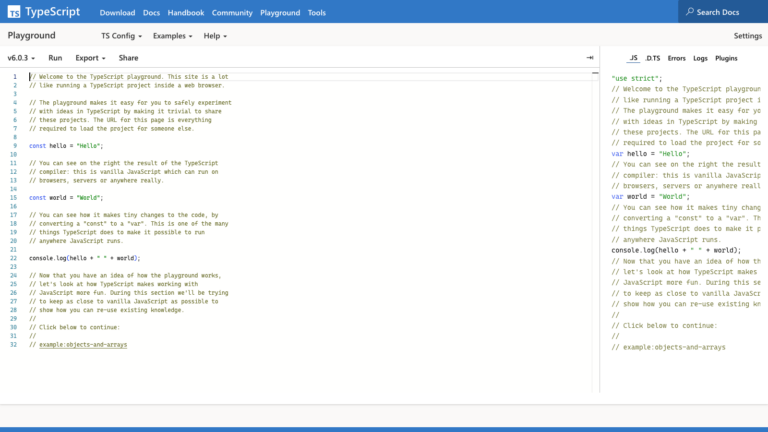
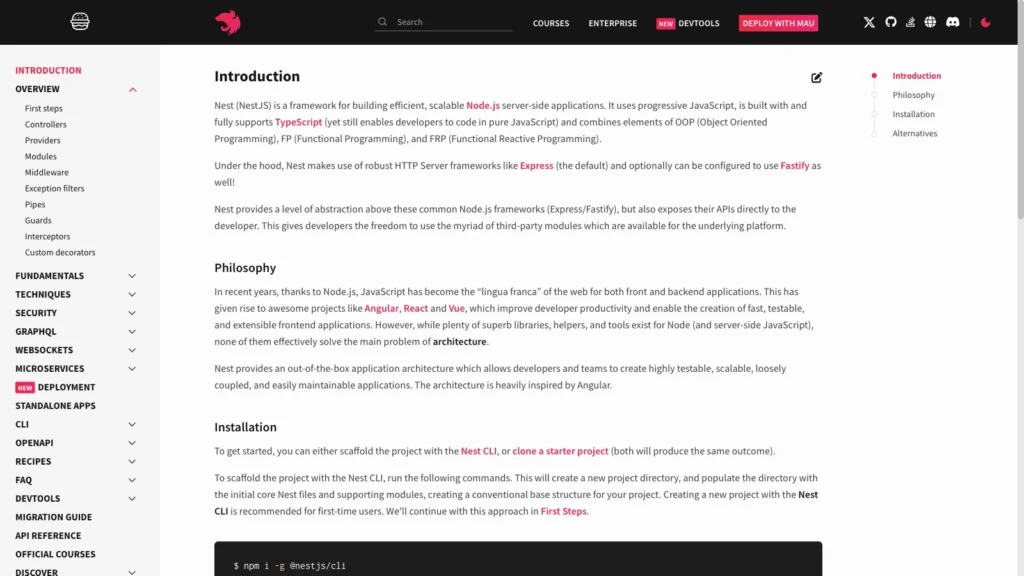
At the practical level, NestJS is an open-source framework for building server-side applications on Node.js. It is written with TypeScript in mind, although JavaScript remains possible, and the project is published under the MIT license. Express is its default HTTP platform, while Fastify is supported through an official adapter. Around that foundation, Nest adds modules, dependency injection, decorators, validation, testing utilities, and a common request lifecycle.
That definition is accurate, but it misses the emotional reason many teams adopt it. NestJS makes a large JavaScript backend feel less improvised. It gives the codebase a grammar.
NestJS does not make backend complexity disappear. It gives that complexity a place to live.
This guide is about that grammar: how it works, why it can be valuable, where it becomes costly, and what kind of project is actually improved by it.
What NestJS Is, and What It Is Not
NestJS sits above an HTTP server rather than replacing the Node.js ecosystem beneath it. By default, a Nest application uses Express. A team can choose Fastify instead, and the framework translates its higher-level concepts into the chosen platform through an adapter. When necessary, the underlying request, response, and platform APIs are still available.
This layered design is important. Nest is not a new JavaScript runtime. It is not a database. It is not a cloud platform, and it does not require microservices. It is an application framework: a set of conventions and runtime facilities for organizing server-side code.
The word opinionated is often used here, sometimes as praise and sometimes as warning. Nest expects features to be organized into modules. It expects controllers to deal with incoming requests and providers to perform most application work. It uses dependency injection to create and connect those providers. Decorators add metadata that tells the framework what a class or method is meant to do.
None of this guarantees good architecture. One can build a tangled NestJS application just as easily as a tangled application in any other framework. But the default path has signposts. For a growing team, signposts are not a small thing.
Why it feels familiar to some developers
Nest’s architecture is heavily inspired by Angular. Developers coming from Angular will recognize modules, decorators, services, guards, interceptors, and dependency injection. Developers from Spring, ASP.NET Core, Symfony, or Laravel may not recognize the exact syntax, but they will recognize the institutional instinct: an application should have visible boundaries and a standard way to compose its parts.
For developers accustomed to minimal Node frameworks, the first encounter can feel heavier. There are more files. There is a container resolving dependencies. A simple route may involve a controller, service, module, data-transfer object, and test. The right question is not whether this is more ceremony. It plainly is. The question is whether the ceremony prevents a more expensive confusion later.
The Problem NestJS Is Trying to Solve
Minimal frameworks solve the problem of receiving a request and returning a response. That is enough to begin. It is not enough to decide how an application should grow.
Imagine a modest commerce API. At first it needs products and orders. Soon it needs customers, permissions, inventory reservations, payment events, refunds, audit trails, email notifications, scheduled cleanup, and integration with a warehouse. Each feature is reasonable. The complexity appears in the relationships between them.
Without shared conventions, teams answer the same questions repeatedly:
- How should a feature expose functionality to another feature?
- Where does validation happen, and is it applied consistently?
- How are authentication and authorization kept separate from business logic?
- How can a service be tested without opening a real database connection?
- Which code belongs to the HTTP transport, and which code should survive if the transport changes?
NestJS offers one coherent answer. Not the only answer, and not always the best one, but a mature answer that the whole team can inspect.
The current official first-steps guide requires Node.js 20 or newer and recommends beginning with the Nest CLI. A generated project includes the application entry point, root module, controller, service, and a test. This may look like boilerplate. More generously, it is a small map of the framework’s worldview.
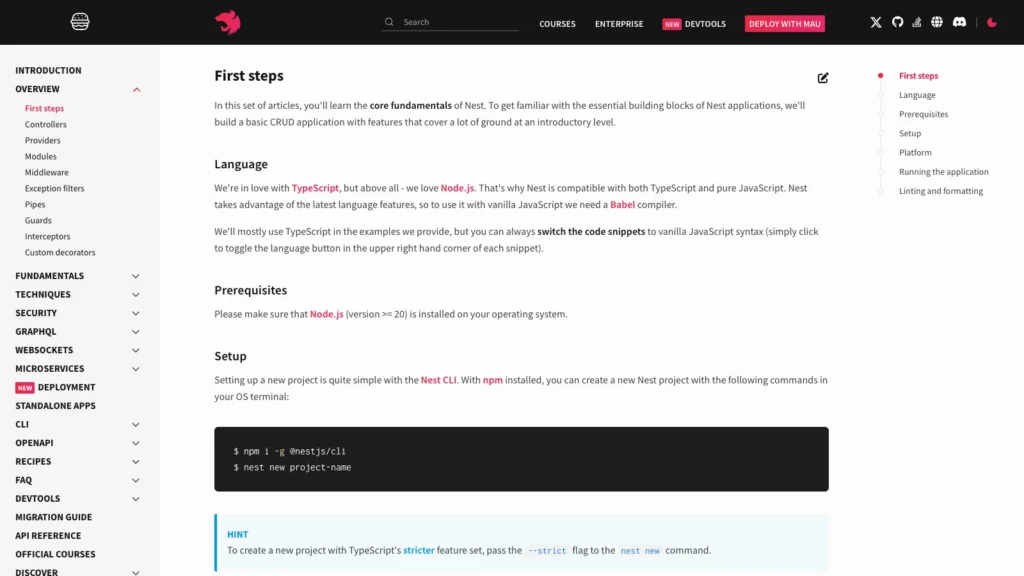
The CLI can generate modules, controllers, providers, resources, libraries, and workspace structures. Its value is not that typing a filename is difficult. Its value is consistency. Generated code follows the same pattern whether it was created on Monday by a senior engineer or on Friday by someone still learning the project.
Version note: This article was verified against NestJS 11.1.28 and the official documentation available on July 21, 2026. The architectural concepts are stable, but prerequisites and APIs should always be checked before starting a new project.
The Three Ideas at the Center of NestJS
You can travel far into NestJS: custom decorators, execution contexts, dynamic modules, transport adapters, event patterns, request-scoped providers. Yet most applications rest on three ideas that are simple enough to hold in one hand: modules, controllers, and providers.
Modules draw boundaries
Every Nest application begins with a root module. Real applications usually add feature modules such as UsersModule, OrdersModule, or BillingModule. A module declares the controllers it owns, the providers it can create, the modules it imports, and the providers it intentionally exports.
This is more than folder organization. Providers are encapsulated by default. If one module needs a service from another, that service must be exported and the receiving module must import its owner. The dependency becomes visible. A module’s exports are, in effect, its public interface.
Used well, modules can align with business capabilities rather than technical layers. An orders module can contain its controller, application service, policies, data access, and message handlers. That makes the code easier to move through because related decisions remain close. Used poorly, modules become a decorative wrapper around a globally shared tangle. The framework supplies a boundary; the team still has to respect it.
Controllers own the transport edge
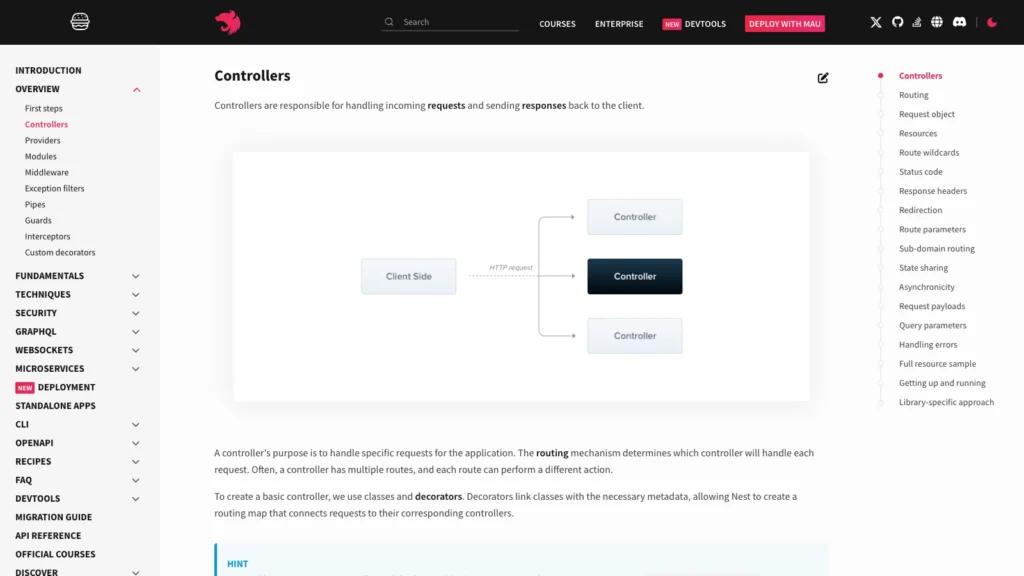
Controllers receive incoming requests and send responses. Decorators such as @Controller(), @Get(), @Post(), and @Param() describe routing metadata. This keeps routing near the methods that handle it and makes the HTTP surface readable.
A controller should usually remain thin. It can read route parameters, accept a validated request body, call an application service, and return the result. When pricing logic, database queries, email delivery, and third-party API calls begin accumulating in a controller, the application boundary has swallowed the application itself.
Providers do the work
A provider is a class, value, factory, or alias that Nest’s dependency injection container can manage. Services and repositories are common examples, but the concept is broader. A clock, configuration object, payment gateway, cache client, or domain policy can all be providers.
The @Injectable() decorator marks a class as available to the dependency system. When a controller asks for that service in its constructor, Nest resolves the relationship and supplies an instance. The controller knows what it needs, not how to construct the entire world beneath it.
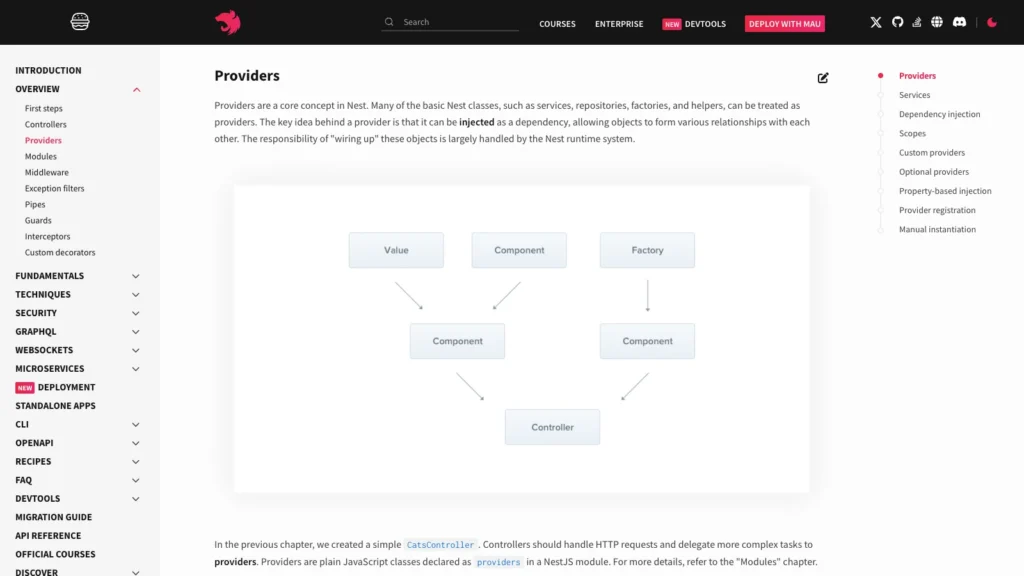
This is the point where NestJS becomes more than a tidy folder convention. The runtime builds an application graph, resolves dependencies, and manages provider lifetimes. Most providers are singletons within their module context by default; request and transient scopes exist for cases that genuinely need them. Scope is powerful, but it has a cost. Request-scoped providers create more objects and can complicate dependency chains, so they should answer a real requirement rather than a vague desire for isolation.
A Small NestJS Example
A tiny example shows the relationship better than a page of terminology. Here is a deliberately simple books feature. The controller owns HTTP concerns, while the service owns the operation.
// books.service.ts
import { Injectable, NotFoundException } from '@nestjs/common';

@Injectable()
export class BooksService {
  private readonly books = [
    { id: 1, title: 'The Dispossessed' },
    { id: 2, title: 'Invisible Cities' },
  ];

  findOne(id: number) {
    const book = this.books.find((item) => item.id === id);

    if (!book) {
      throw new NotFoundException('Book not found');
    }

    return book;
  }
}
// books.controller.ts
import { Controller, Get, Param, ParseIntPipe } from '@nestjs/common';
import { BooksService } from './books.service';
@Controller('books')
export class BooksController {
constructor(private readonly booksService: BooksService) {}
@Get(':id')
findOne(@Param('id', ParseIntPipe) id: number) {
return this.booksService.findOne(id);
}
}// books.module.ts
import { Module } from '@nestjs/common';
import { BooksController } from './books.controller';
import { BooksService } from './books.service';
@Module({
controllers: [BooksController],
providers: [BooksService],
})
export class BooksModule {}There is no database here, no request DTO, and no production persistence strategy. That restraint is intentional. The example demonstrates the contract: the module registers the pieces, the controller maps an HTTP request, the pipe turns a path segment into a number or rejects it, and the injected service performs the operation.
In a real application, the service might depend on a repository token rather than on an ORM implementation directly. A test could replace that token with an in-memory fake. The controller would not need to change. This is dependency inversion becoming practical rather than merely admirable.
The Request Lifecycle: Pipes, Guards, Interceptors, and Filters
NestJS gives common cross-cutting concerns distinct names and positions in the request lifecycle. This is one of its strongest features, and also one of the places beginners can feel surrounded by vocabulary.
- Middleware runs early and is useful for general request processing inherited from the underlying HTTP platform.
- Guards decide whether a request may continue, making them a natural home for authentication and authorization decisions.
- Interceptors wrap execution before and after a handler, which suits logging, timing, response mapping, caching, and other shared behavior.
- Pipes transform or validate incoming values before they reach the controller method.
- Exception filters translate unhandled exceptions into controlled responses.
The benefit is not simply that these tools exist. Express middleware can do many of the same things. The benefit is semantic placement. A guard communicates permission. A pipe communicates transformation or validation. An interceptor communicates wrapping behavior. The name narrows the reader’s expectations.
There is a danger, though. Once a framework offers a mechanism, teams may use it everywhere. A request that passes through several global interceptors, nested guards, parameter pipes, and custom decorators can become difficult to trace. Abstraction should reduce the number of things a developer must hold in mind. When it increases that number, it has become ceremony for its own sake.
TypeScript and Decorators: Helpful Friction
NestJS supports JavaScript, but TypeScript is clearly the native experience. Types improve navigation, refactoring, and the expression of contracts across a backend. Decorators add the runtime metadata that Nest uses to discover controllers, providers, routes, parameters, and modules.
This combination can feel unusually productive. A class declares what it is. A method declares which route it handles. A constructor declares what it needs. The framework turns those declarations into a running application.
But types deserve an honest caveat: TypeScript checks compile-time relationships; it does not validate unknown network input at runtime. A request claiming to match an interface has not proved anything. Nest’s ValidationPipe, commonly paired with class-validator and class-transformer, can enforce DTO rules at the boundary. That behavior must be configured. Types are a map, not a border guard.
Decorators also introduce indirection. A line that looks declarative may trigger framework behavior not visible in ordinary control flow. Experienced teams learn the lifecycle and use custom decorators sparingly. New teams sometimes create a private language inside the framework before they have earned the need for one.
The most useful abstraction is the one that lets the next developer predict what happens next.
Beyond REST: One Framework, Several Transports
NestJS is commonly encountered as a REST API framework, but its programming model reaches further. Official packages support GraphQL, WebSocket gateways, and microservice transports. The same broad concepts – modules, dependency injection, guards, pipes, interceptors, and filters – can be reused across those environments.
For microservices, Nest offers transport integrations including TCP, Redis, MQTT, NATS, RabbitMQ, Kafka, and gRPC. This does not mean a team should begin by splitting a new product into fifteen services. The framework makes a style available; it does not make the operational cost disappear.
A modular monolith is often the better beginning: one deployable application with strong internal feature boundaries. If a boundary later needs independent scaling or deployment, a thoughtful module can become a useful starting point for extraction. The worst reason to choose microservices is that a framework has a menu item for them.
GraphQL and WebSockets carry the same lesson. Unified concepts can reduce mental switching, especially for a team supporting several transports. But each transport retains its own semantics, failure modes, observability needs, and security concerns. A shared decorator vocabulary is not a substitute for understanding the network.
Express or Fastify?
Express remains the default platform because it is familiar, mature, and surrounded by middleware. For many applications, that is enough. Fastify is the official alternative when lower overhead or its ecosystem and schema-oriented approach are a better fit. Nest documents the adapter and its platform-specific caveats in the official Fastify guide.
It is tempting to reduce this decision to a benchmark. I would resist that. A synthetic request-per-second number does not describe database latency, serialization cost, third-party APIs, logging, authentication, cold starts, deployment topology, or the behavior of your actual traffic. The faster adapter in isolation may not be the bottleneck that matters.
Choose deliberately:
- Prefer Express when middleware compatibility, team familiarity, and the conventional Nest path matter most.
- Evaluate Fastify when throughput and overhead are demonstrated constraints, or when Fastify-specific features suit the application.
- Measure the whole service under representative load before claiming a performance victory.
The adapter boundary is useful, but not perfectly invisible. Recipes and middleware written specifically for Express may need Fastify equivalents. Once application code reaches deeply into platform-specific request or response objects, switching becomes a migration rather than a configuration change.
Security Is Supported, Not Supplied
NestJS gives security concerns sensible extension points. Guards work well for authentication and authorization. Pipes can reject malformed input. The official security guidance covers authentication, Helmet, CORS, CSRF protection, rate limiting, encryption and hashing, while the validation guide explains how runtime input checks can be applied at the application boundary.
Still, a Nest application is not secure merely because it uses Nest. The framework cannot know your authorization model, data sensitivity, tenancy boundaries, token strategy, secret management, dependency risk, or deployment environment. Most safeguards require installation and configuration. A forgotten global validation pipe or an authorization check placed only in the frontend remains forgotten.
A production review should include at least:
- runtime validation and controlled transformation of every untrusted input;
- authorization at the resource and action level, not only authentication;
- secure headers, a deliberate CORS policy, and rate limits appropriate to the endpoint;
- safe error responses that do not leak internals;
- dependency updates, lockfile review, secret rotation, logging hygiene, and transport security;
- tests for denied paths, not only successful ones.
The framework helps organize these responsibilities. Organization is valuable. It is not absolution.
Testing and the Real Value of Dependency Injection
Dependency injection is sometimes explained as a pattern for avoiding the new keyword. That is much too shallow. Its real value appears when a dependency must vary.
A payment service may depend on a gateway token. Production can bind that token to a Stripe adapter; a unit test can bind it to a deterministic fake. A repository can be replaced without booting PostgreSQL. A clock can be controlled. A random identifier generator can become predictable. The class under test receives the same contract while the surrounding world becomes manageable.
Nest’s official testing package and utilities can create a testing module, resolve providers, override dependencies, and bootstrap an application for end-to-end tests. The architecture does not automatically produce good tests, but it creates useful substitution points.
There is a balance to keep. Mocking every collaboration can produce tests that know more about wiring than behavior. I prefer narrow unit tests for important business rules, integration tests where infrastructure contracts matter, and a smaller number of end-to-end tests for critical journeys. The dependency container should make those choices possible, not dictate a religion.
The Cost of an Opinionated Framework
Framework enthusiasm often focuses on what a tool gives us. Mature evaluation also asks what it asks from us.
A steeper beginning
A developer new to Nest must learn decorators, modules, providers, injection tokens, the request lifecycle, scopes, and framework-specific testing. Those concepts are useful, but they are not free. For a tiny service with two routes and a short life, the learning cost may exceed the maintenance benefit.
More indirection
Dependency injection separates construction from use. Decorators separate declarations from runtime behavior. Modules control visibility. Each is defensible; together they can make execution less obvious to someone reading from top to bottom. Debugging requires understanding both your code and the framework’s graph.
The temptation to over-architect
A framework with CQRS support, microservice transports, dynamic modules, custom decorators, and multiple scopes can make every project feel destined for enterprise scale. Most are not. Architecture should respond to demonstrated complexity. Designing for an imaginary future can make the present unnecessarily slow.
Framework-shaped coupling
Nest exposes the underlying platform, but applications still accumulate Nest-specific decorators, exceptions, interfaces, and lifecycle assumptions. This is normal. A framework is useful precisely because we depend on it. The goal is not zero coupling; it is deliberate coupling. Keep domain rules plain where doing so genuinely improves portability and testing, but do not bury every Nest import behind an abstraction simply to claim purity.
NestJS, Next.js, and the Confusing Similarity of Names
NestJS and Next.js are frequently confused by newcomers, an understandable consequence of one letter. They solve different primary problems.
| Question | NestJS | Next.js |
|---|---|---|
| Primary role | Server-side application and API framework | React web application framework |
| Main concern | Backend architecture, transports, dependency injection | Pages, rendering, routing, server and client React |
| Typical output | REST API, GraphQL API, WebSocket server, worker, microservice | Website or web application with UI |
| Can they work together? | Yes. A Next.js frontend can call a NestJS backend, though many products do not need both. | |
I explored the frontend side in Next.js and the Architecture of Modern Web Apps. The useful distinction is this: Next.js asks how a React experience should reach the browser; NestJS asks how a server-side application should be organized behind an interface.
Using both can make sense for independent teams, multiple clients, strong backend boundaries, or a product whose API has a life beyond one web interface. It can also duplicate concerns and deployment work for a modest application. Two capable frameworks do not automatically make one simpler system.
A Mature Project, Still Moving
NestJS is no longer an experimental corner of the Node ecosystem. The project has years of releases, extensive official documentation, an active repository, adapters, integrations, migration guides, and a broad set of maintained packages. At the time of verification, the latest official GitHub release was version 11.1.28, published on July 8, 2026.
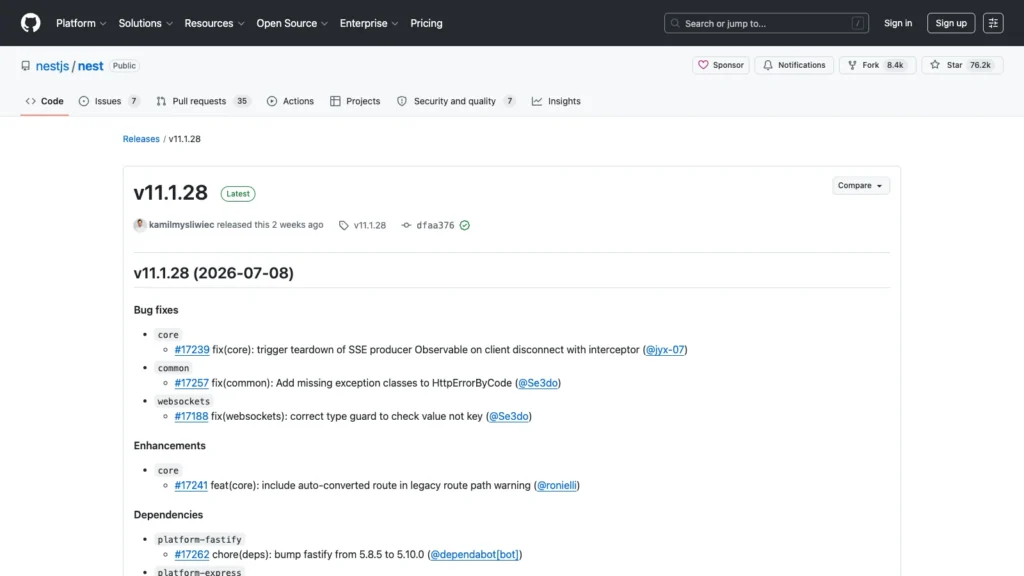
Version numbers are useful, but maintenance health is the more important signal. The 11.1.28 release itself contains bug fixes across core, common exceptions, and WebSockets, plus dependency work touching Fastify. That is ordinary maintenance, which is exactly what one hopes to see in infrastructure: not constant reinvention, but continued attention to edges that real applications encounter.
Teams should still treat upgrades as engineering work. Read migration guides and release notes. Test adapters and third-party integrations. Watch Node.js requirements. Framework maturity reduces uncertainty; it does not remove change.
When NestJS Is a Good Fit
NestJS tends to earn its keep when the application and team are expected to grow together. I would seriously consider it when several of these are true:
- The backend contains substantial business rules rather than a handful of pass-through routes.
- Several developers need a shared architectural vocabulary.
- TypeScript is already central to the team’s workflow.
- Dependency replacement and automated testing matter.
- The system may expose REST, GraphQL, events, jobs, or WebSockets under one application model.
- Clear feature boundaries matter more than minimizing the initial file count.
- The codebase is expected to outlive its first set of authors.
It is particularly comfortable for teams coming from Angular or structured server frameworks, because the conventions feel familiar. It can also be valuable for a JavaScript-heavy organization that wants one language across the stack without giving up backend structure.
When I Would Choose Something Smaller
Not every backend needs an application framework. A short-lived webhook receiver, tiny internal service, edge function, prototype, or API with a narrow surface may be clearer in Fastify, Express, Hono, or another lighter tool. If a team dislikes decorators or wants explicit functional composition, Nest’s central style may create friction every day.
I would also hesitate when startup time, bundle size, or constrained serverless and edge environments dominate the design. Nest can run in serverless settings, but a framework designed around a dependency graph and application bootstrap is not automatically the leanest answer for every function. Measure the environment you actually deploy to.
And sometimes the right alternative is not another framework. It is a smaller system. We occasionally choose architecture to compensate for uncertainty about the product. No folder structure can rescue a feature nobody needs.
The Deeper Value of Structure
The older I get in software, the less impressed I am by how quickly a project begins. Beginnings are unusually forgiving. The codebase is small, the relationships are visible, and the people who made the decisions are still nearby. Almost any tool feels elegant before history arrives.
Maintenance is where architecture tells the truth.
NestJS is compelling because it is designed with that future in mind. Modules make boundaries discussable. Dependency injection makes construction replaceable. Controllers keep the transport edge visible. Pipes, guards, interceptors, and filters give recurring concerns recognizable homes. The CLI makes repetition consistent. None of these ideas is new, and that is part of their strength. NestJS brings established application patterns into the Node.js world in a coherent, TypeScript-native form.
Yet structure can become a hiding place too. We can create layers instead of understanding the domain. We can add abstractions because the framework makes them easy. We can mistake a clean dependency graph for a useful product. The discipline is to accept the conventions that reduce collective confusion and refuse the ones that answer no present need.
So, what is NestJS? It is a backend framework, certainly. More interestingly, it is a bet that teams write better software when architecture is not left entirely to mood and memory.
Whether that bet is right for your project depends less on how many requests the framework can serve than on a quieter question: when the codebase has become larger, older, and owned by people who were not there at the beginning, will its shape still help them understand what to do next?