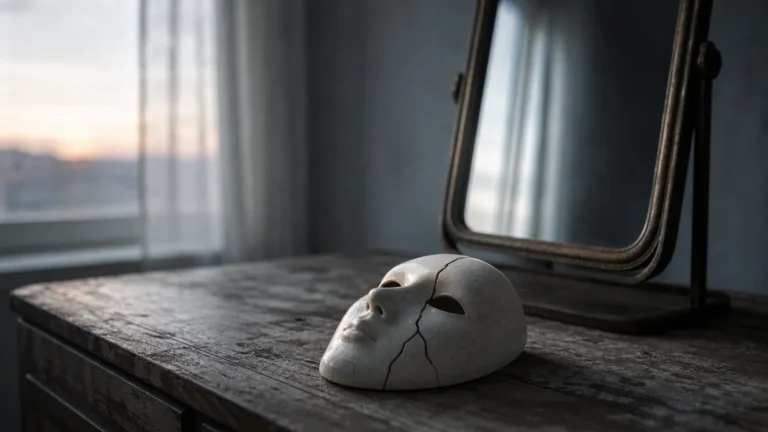
There are words that become too popular for their own good. They begin as careful instruments, made for precision, then one day they are everywhere: in captions, arguments, breakup stories, comment sections, group chats, late-night searches, and the little private courts we hold in our own heads.
Narcissist has become one of those words.
It appears whenever someone hurts us and refuses to apologize. It appears when a partner is selfish, when a boss is cold, when a friend talks too much about themselves, when a public figure seems addicted to attention. Sometimes we even turn the word toward ourselves with a nervous little half-smile: am I narcissistic for wanting to be seen? For posting the photo? For enjoying praise?
I understand the temptation. A label can feel like a lamp in a dark room. Suddenly the chaos has a name. The confusion becomes a pattern. The hurt becomes explainable. And when we have suffered inside a relationship where reality kept shifting under our feet, explanation can feel almost like oxygen.
But a word can also become a weapon. It can become a shortcut around understanding. It can flatten a person into the worst thing they have done, or worse, into the worst thing we fear they are. Psychology gives us language to notice life more honestly. Used carelessly, the same language can make us less honest.
Not every selfish act is narcissism. Not every painful relationship is a personality disorder. And not every person who wants to be seen is empty inside.
So perhaps the calmer question is not simply, “Who is a narcissist?” It is this: what are we trying to understand when we reach for that word?
Because beneath the trend there is something real. Narcissistic Personality Disorder exists. Narcissistic traits exist. Emotional abuse exists. So do insecurity, shame, performative confidence, attachment wounds, ordinary immaturity, cultural vanity, and the strange pressure of living in a world where the self is constantly reflected back to itself.
We are not living only with narcissism. We are living with mirrors.
What Narcissism Actually Means
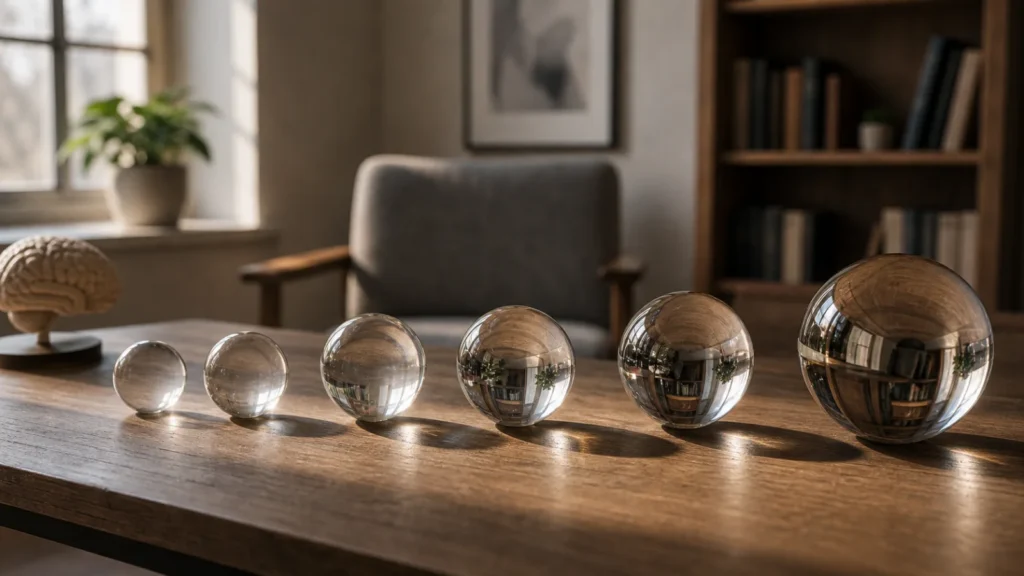
Clinically, narcissism is not the same thing as vanity. It is not merely liking attention or dressing well or taking pleasure in being admired. Narcissism begins with self-regard, but at its more troubled edge it becomes a rigid way of protecting the self from shame, dependency, ordinariness, and emotional exposure.
That word rigid matters. Many of us become self-centered under stress. Many of us exaggerate a little when we feel small. Many of us struggle to hear criticism when it touches an old wound. We may want admiration. We may envy others. We may fantasize about being special when life feels unbearably common. These are not automatically signs of a disorder. They are, often, signs of being human in an anxious body.
Narcissistic Personality Disorder, or NPD, is something narrower and more serious. The DSM-5-TR describes it through a long-standing pattern of grandiosity, a strong need for admiration, and impairments in empathy, beginning by early adulthood and appearing across different contexts. Diagnosis also involves significant distress or impairment, not just behavior that irritates other people.
The familiar clinical features include things like:
- an inflated sense of importance or achievement,
- fantasies of exceptional success, power, beauty, brilliance, or ideal love,
- a belief in being unusually special or only understandable to special people,
- a persistent hunger for admiration,
- a sense of entitlement,
- using others as instruments for one’s own needs,
- difficulty recognizing or caring about the feelings of others,
- envy, or the belief that others are envious,
- arrogant or contemptuous attitudes.
Even this list can mislead us if we treat it like a quiz. Diagnosis is not a game of counting unpleasant behaviors in someone we dislike. A trained clinician looks at the pattern, its depth, its duration, its context, the person’s functioning, the possibility of other explanations, and the whole human story around it.
That is why the phrase “on a spectrum” is useful, but only if we do not turn it into fog. At one end there is healthy self-esteem: the capacity to value oneself without needing to diminish others. Then there are narcissistic traits, which can appear in ordinary people, especially under pressure or in environments that reward performance. Further along, there are more stable narcissistic patterns that damage relationships. And at the clinical end, there is NPD, a personality disorder that shapes the person’s way of relating to self, others, admiration, criticism, shame, and vulnerability.
The difference is not only intensity. It is also flexibility. A healthy person can be proud and still apologize. They can enjoy admiration and still care about someone else’s pain. They can be ambitious and still tolerate being ordinary in a room. In more pathological narcissism, the self has less room to breathe. Everything becomes a mirror, a threat, a ranking, a performance, a wound.
A careful note: No article, video, checklist, or comment thread can diagnose you or someone in your life. If the question matters in a serious way, it belongs with a qualified mental health professional.
Why Narcissism Feels Everywhere Online
If Narcissistic Personality Disorder is not especially common, why does narcissism feel so common now?
Part of the answer is simple: social media makes personality visible. It does not have to create every trait it displays. It selects, rewards, repeats, and magnifies. A person inclined toward self-promotion will naturally find a stage where self-promotion is profitable. A person who needs admiration will find a machine that can deliver little pellets of it all day. A person who is wounded by invisibility will find a culture that says visibility is proof of existence.
This is what I think of as the showroom effect. Social platforms turn private traits into public exhibits. The person who might once have dominated a dinner table can now dominate a feed. The person who might once have needed one room’s admiration can now measure admiration by numbers: views, likes, shares, comments, saves, follows.
But there is another layer, and it is more uncomfortable. Social media does not only amplify narcissistic traits in people who already lean that way. It also trains ordinary people to watch themselves from the outside.
We learn to ask strange questions:
- How will this look?
- Will people understand the version of me I am trying to show?
- Is this too vulnerable, too ordinary, too much, not enough?
- Will this be ignored?
- What does the silence mean?
There is a sadness in that. We become curators of ourselves before we have even finished becoming ourselves.
I do not think this means everyone is becoming narcissistic. That feels too easy, too dramatic, and perhaps too morally satisfying. It may be truer to say that we are becoming self-monitoring. We are learning to live as if a small audience is always somewhere nearby. The old mirror showed us our face. The new mirror asks us to manage a persona.
This is why the phrase “narcissism epidemic” should be used carefully. Large population studies have challenged the simple story that modern life is producing endlessly more grandiose narcissists. Culture has changed, yes. Visibility has changed. Incentives have changed. But a change in what gets displayed is not automatically a change in the rate of a clinical disorder.
We may not be surrounded by more narcissists. We may be surrounded by more mirrors, more metrics, more stages, more reasons to turn the self into content.
A mirror-filled world does not make every person a narcissist. It makes the question of the self harder to leave alone.
What We Keep Mistaking for Narcissism

One reason narcissism is so often misused is that some ordinary behaviors resemble pieces of the clinical picture when seen from a distance. The problem is not that people are imagining harm where no harm exists. The problem is that the same visible behavior can come from very different inner places.
Take selfies. A person who posts many photos of themselves may be grandiose. Or they may be lonely. Or insecure. Or building a business. Or playing with identity. Or simply participating in the visual language of their generation. The behavior alone does not reveal the structure of the soul.
Seeking validation online is similar. It can be narcissistic, certainly. But it can also be a rational response to a world where attention has become a kind of social currency. When platforms reward visibility, people learn to seek visibility. That does not make the desire pure, but it also does not make it pathological.
Confidence is another easy casualty. Some people really are arrogant. But others have simply stopped apologizing for their competence. In insecure rooms, healthy confidence can look aggressive because it interrupts the local agreement that everyone must remain small.
And then there is defensiveness. Almost everyone has a tender place where criticism enters badly. A defensive reaction can come from shame, trauma, exhaustion, perfectionism, family history, low self-esteem, or fear of rejection. It may damage relationships, but it is not automatically NPD.
A few distinctions help:
- Selfishness is behavior. It may be occasional, situational, or learned.
- Narcissistic traits are recurring tendencies around admiration, status, entitlement, and empathy.
- Narcissistic abuse describes harmful relational patterns, though the term should be used with care.
- NPD is a clinical diagnosis involving a pervasive and impairing personality pattern.
These distinctions matter because we live differently with each one. Selfishness may require a conversation. Harm may require a boundary. Abuse may require distance and support. A disorder may require professional treatment. If we use the same word for all of them, we lose the ability to respond wisely.
Therapy-Speak and the Comfort of Labels
Therapy language entered everyday speech because people needed it. I do not want to mock that. Words like boundary, trigger, trauma, attachment, gaslighting, and narcissism have helped many people name experiences that were previously swallowed in silence.
For someone who has spent years doubting themselves, a psychological term can be a small act of rescue. It says: no, you are not crazy for noticing this. There is a pattern here. Other people have lived it too.
But every rescued word has a second life online. It becomes shorter, sharper, more portable. It must fit into a video title, a carousel slide, a punchy caption, a comment written while angry. Nuance is slow, and platforms prefer speed. Complexity gets edited until the word is no longer a tool but a verdict.
So gaslighting becomes any disagreement. Trauma bonding becomes any difficult attachment. Narcissist becomes anyone who hurt us and did not give us the apology we needed.
I say this gently because I have done versions of it too. When we are in pain, we do not always want nuance. Sometimes nuance feels like betrayal. We want a clean name for the person who made us feel confused. We want the moral relief of certainty.
Yet certainty can become another kind of trap.
The danger of self-diagnosis, or diagnosing others through content, is not only that we may be wrong. It is that we may become attached to being right. We may stop asking what actually happened, what can be repaired, what cannot be repaired, what belongs to them, what belongs to us, and what needs professional care.
There are real risks here:
- Misinformation. Short videos often make complex disorders feel instantly recognizable.
- Oversimplification. The same diagnosis can look different across people, histories, cultures, and relationships.
- Delayed care. A person may collect labels instead of seeking assessment, therapy, or support.
- Stigma. People with personality disorders become caricatures rather than human beings in pain.
- Relational blindness. A label can keep us from seeing our own part in a dynamic, especially when that part is uncomfortable.
None of this means we should abandon psychological language. It means we should use it with the respect we give sharp things. Carefully. Deliberately. With awareness that it can cut in more than one direction.
The Pain Behind the Mask

One of the crueler myths online is that people with Narcissistic Personality Disorder feel nothing. They are described as machines of manipulation, empty predators, people without pain. I understand why this story spreads. If someone has been harmed by narcissistic behavior, compassion can feel dangerous, almost like reopening a locked door.
But a clinical reality can be more difficult than a moral cartoon. Many people with NPD suffer deeply. The grandiosity is often not the whole truth; it is a defense against the truth. Behind the polished self may be shame, emptiness, envy, humiliation, panic, and a terrifying dependence on admiration to feel real.
Criticism can feel annihilating. Ordinary limitation can feel unbearable. Someone else’s success can feel like personal diminishment. Intimacy can be desired and feared at the same time, because intimacy asks for mutuality, and mutuality requires a self stable enough to recognize another person as fully real.
This does not excuse cruelty.
It is possible to understand pain without surrendering one’s boundaries to it. In fact, good understanding often strengthens boundaries. When we stop imagining harmful people as monsters, we may also stop imagining that our love can magically transform them. We can become more realistic. We can say: I see that there is suffering here, and I also see that I cannot be the treatment for it.
This distinction matters especially in intimate relationships. Compassion without boundaries becomes self-abandonment. Boundaries without compassion can become contempt. The difficult human task is to hold both: their pain is real, and so is the harm. Their wound may explain the pattern, but it does not make us responsible for enduring it.
Compassion is not permission. It is a refusal to make hatred our final form of understanding.
Can Narcissistic Personality Disorder Be Treated?
Another popular myth says narcissism is hopeless. People with NPD never change, never reflect, never improve. There is a grain of truth hidden inside the exaggeration: treatment can be difficult. Personality patterns are not moods. They are long-practiced ways of surviving, defending, interpreting, and relating. They do not dissolve because someone read a thread and felt briefly inspired.
But difficult is not the same as impossible.
Psychotherapy can help people with narcissistic patterns develop more realistic self-esteem, tolerate criticism, recognize the inner lives of others, manage shame, reduce exploitative behavior, and build relationships that are less dependent on admiration or control. The work is usually slow. It may require long-term engagement. It often begins not with the person saying, “I am narcissistic,” but with depression, relationship collapse, rage, emptiness, anxiety, career trouble, or the exhaustion of constantly defending a fragile self.
Different therapeutic approaches may be used, including psychodynamic therapy, cognitive behavioral therapy, schema-focused work, mentalization-based approaches, and group therapy in appropriate settings. The specific method matters, but the relationship matters too. Treatment asks the person to do something profoundly uncomfortable: to face shame without instantly turning it into superiority, contempt, blame, or escape.
That is a hard road. Still, human beings are not statues. Patterns can soften. Defenses can become less automatic. Empathy can grow where there is motivation, safety, accountability, and time.
I do not want to romanticize this. Nobody should stay in a harmful relationship because an essay says change is possible. Possibility belongs to the person doing the work. Safety belongs to the person being harmed. Both truths must be protected.
How to Use the Word More Carefully
So what do we do with the word narcissism?
We do not need to ban it. We do not need to become afraid of it. But perhaps we can use it more slowly.
A few practices help me:
- Describe the behavior before naming the person. “They lied about what happened” is clearer than “They are a narcissist.”
- Notice patterns, not isolated moments. Everyone can be selfish once. A pattern tells a deeper story.
- Separate harm from diagnosis. You do not need a clinical label to justify leaving a damaging relationship.
- Keep professional diagnosis professional. Personal clarity is useful; certainty about someone else’s disorder is often beyond us.
- Let compassion and boundaries coexist. One protects your humanity; the other protects your life.
That third point is especially important. Many people search for a diagnosis because they feel they need permission to trust their pain. But you do not have to prove someone has NPD in order to say, “This relationship is hurting me.” You do not need a disorder to set a boundary. You do not need a label to leave.
At the same time, careful language protects the seriousness of real narcissistic pathology. If every selfish ex is a narcissist, then the word loses power when someone is genuinely trapped in a devastating pattern of manipulation, entitlement, devaluation, and emotional confusion. Precision is not politeness. Precision is protection.
A Small Discipline of Attention
There is also a more personal discipline hidden in all of this. Before I call someone narcissistic, I try to pause long enough to ask what the word is doing for me. Is it helping me see more clearly, or is it helping me feel less wounded? Is it naming a pattern, or protecting me from grief? Am I trying to understand, or am I trying to win a private trial where the other person cannot speak?
These questions do not make harmful behavior acceptable. They simply return responsibility to language. Words are not innocent just because they are psychologically sophisticated. A clinical term can carry the same old anger in a more respectable coat.
Sometimes the better sentence is smaller. “They were cruel.” “They could not hear me.” “I did not feel safe.” “They kept making my pain about themselves.” “I need distance.” These sentences are not as dramatic as a diagnosis, but they often have more moral clarity. They describe lived reality without pretending to know the whole architecture of another person’s mind.
And when we turn the question toward ourselves, the same discipline applies. We do not need to panic because we enjoy praise, feel jealous, want recognition, or become defensive when criticized. These are places to examine, not identities to collapse into. The question is what we do next. Do we repair? Do we listen? Do we make room for another person’s experience? Can we be seen without demanding worship? Can we be wrong without feeling destroyed?
In ordinary life, this may be where psychological maturity begins: not in never having narcissistic impulses, but in noticing them without obeying them. The wish to be admired arrives. The need to be right tightens the chest. The envy comes. The shame flares. Then there is a small space, if we are lucky and practiced, where we can choose something less automatic.
That space is not glamorous. No one applauds it. It will not trend. But it may be one of the few places where the self becomes freer.
The Self in a Room Full of Reflections
The old myth of Narcissus is usually told as a warning against vanity: a young man falls in love with his reflection and wastes away beside the water. But I have always felt there is something more tragic there. Narcissus does not simply love himself. He cannot reach himself. He is trapped by an image that looks intimate and remains untouchable.
That is the sorrow of the mirror. It gives us ourselves and withholds us at the same time.
Modern life has multiplied these mirrors beyond anything the old myth could have imagined. We see ourselves in photos, metrics, reactions, dating profiles, professional bios, follower counts, read receipts, analytics dashboards, and the silent interpretations of strangers. We are reflected everywhere, but not always known.
Maybe this is why narcissism fascinates us so much. It is not only about a disorder over there, safely inside someone else. It touches something in the modern condition. We all have to ask, in one way or another: how do I remain a person when so much of life invites me to become an image?
Healthy self-love does not require constant reflection. It can survive being unseen. It can admit fault without collapsing. It can receive admiration without becoming addicted to it. It can meet another person not as an audience, not as a threat, not as a tool, but as a real center of experience.
Perhaps that is the quiet opposite of narcissism: not self-hatred, not false humility, not disappearing into other people’s needs, but the ability to exist without turning every room into a mirror.
I want to keep the word narcissism. It names something real, and for some people it names something life-altering. But I want to keep it with clean hands. I want us to remember that diagnosis is not gossip, that pain is not proof, that compassion is not weakness, and that boundaries do not need hatred in order to be firm.
There is a better use for psychological language than winning arguments. It can help us look more clearly, first at what hurt us, then at what we repeat, and finally at the kind of attention we offer to ourselves and to others.
So maybe the question is not only whether someone else is narcissistic. Maybe the deeper question is quieter, and more difficult: surrounded by so many reflections, what would it mean to become real?